
On the spot
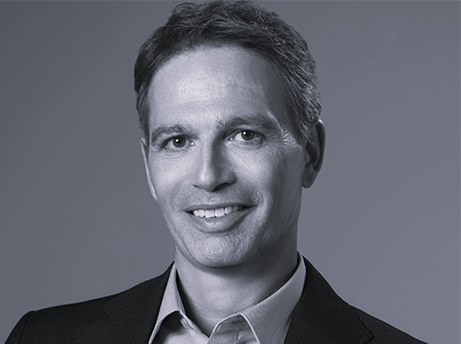
Pierre Eymann
Secretary General, World Union of Olympic Cities
January 2026
Pierre Eymann, you are the new Secretary General of the World Union of Olympic Cities, nominated at the latest General Assembly held in PyeongChang, Republic of Korea, in October 2025. Could you introduce yourself in a few words?
I grew up in a small city near Lausanne, and after studying business administration, I began my career in the oil and gas equipment sector. Driven by a long-standing passion for sport and Olympism, I soon shifted career paths to join an international sport federation. I enjoyed working across a variety of roles, from sport and event management to marketing and media rights, while also deepening my expertise by studying Sport Organisation Management.
Joining the World Union of Olympic Cities is a privilege, and I am genuinely enthusiastic about contributing to the Union’s work, supporting its Members, and helping further develop a platform grounded in cooperation, knowledge sharing, and a strong sense of collective purpose
The Executive Committee elections have led to significant renewal and the arrival of new Cities. We are pleased to welcome Amsterdam, Brisbane, Lillehammer, Rio de Janeiro, and St. Louis, alongside the cities beginning a third term: Innsbruck, London, and Paris. What does this renewal mean?
The renewal of the Executive Committee reflects a balanced combination of change and continuity. The arrival of new member Cities brings fresh perspectives and renewed momentum, while the continuation of Cities entering a third mandate, together with Lausanne, Athens, and the IOC, ensures stability, institutional memory, and strategic consistency.
This renewal also strengthens the representativity of Summer Olympic Cities and broadens the range of operational and cultural experience within the Committee. The presence of highly experienced professionals from different regions supports informed, pragmatic, and globally relevant discussions.
I am particularly motivated by the opportunity to work alongside such inspiring personalities, who are willing to dedicate their time, expertise, and commitment to advancing the Union’s mission.
For the first time, an Affiliate Member – the Korea Sports Promotion Foundation – is also joining the Executive Committee. How does the inclusion and participation of Olympic legacy entities strengthen the Union and open new perspectives?
The inclusion of an Affiliate Member on the Executive Committee marks a natural evolution of the Union’s governance. Olympic legacy entities play a crucial role in the long-term stewardship, financing, and activation of Olympic legacies, managing both tangible assets, such as venues and equipment, and intangible elements, including programmes, volunteer communities and cultural initiatives.
Having Affiliate Members represented at the board level ensures an even more balanced reflection of the Union’s full membership. The Korea Sports Promotion Foundation brings recognised expertise and a strong track record in this field. KSPO has played an instrumental role in the organisation of the Olympic Legacy Forum and the smartcities & sport summit 2025, offering the Union the opportunity to observe first-hand its commitment to Olympic legacy governance and the sustainable development of sport in Korea.
This representation also strengthens collaboration between Active and Affiliate Members and supports a more integrated, inclusive, forward-looking approach to the Union’s mission.
Finally, following an amendment to the statutes, Cities preparing to host the Games may join the Executive Committee for a four-year period. The Cities of Dakar and Los Angeles have thus become members of the Committee. How does this development help optimise the Union’s missions in collecting and sharing Olympic legacy?
The inclusion of Cities preparing to host the Games represents a significant enhancement of the Union’s mission. Being closer to the delivery phase of the Games allows the Union to engage with Host Cities at the moment when Olympic legacy strategies are actively being designed and implemented.
This evolution reinforces the Union’s role as a platform for structured peer exchange, enabling Olympic Hosts to benefit from the experience of Union Members while contributing real-time insights from ongoing preparations. By bringing together past, current, and future Olympic Cities within its governance, the Union strengthens its relevance and effectiveness in collecting, sharing, and continuously improving Olympic legacy practices.
In this month of January, the curtain rises on a new year. What projects are upcoming?
The Union enters the new year with a clear roadmap and strong momentum. A major milestone will be the next edition of the Olympic Legacy Forum, combined with the smartcities & sport summit, to be held in Lausanne from 16 to 18 November 2026. I am sure you have already saved the date!
The year will also be marked by a particularly rich Olympic calendar, with the Milano Cortina Olympic Games and the Dakar Youth Olympic Games. These events will generate new experiences, case studies, and insights that will further inform the Union’s work.
Finally, a series of significant Olympic anniversaries – including Melbourne (1956), Innsbruck and Montréal (1976), Atlanta (1996), Torino (2006), as well as Rio de Janeiro and Lillehammer (2016) – will offer valuable opportunities to revisit legacy trajectories over time and deepen our understanding of long-term Olympic legacy activation. We invite all Members to contact us to share their stories, either related to their celebrations, or more broadly their legacy activation achievements.