
On the spot
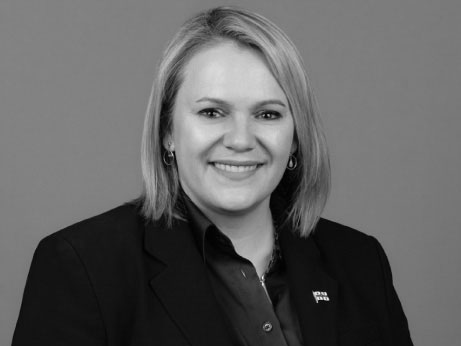
Christine Black
Borough mayor of Montréal-Nord,
Executive committee vice-chair, responsible of families, senior citizens, youth, sports and recreation
April 2026
Montréal is marking 50 years since it hosted the 1976 Summer Olympics. What are the main highlights of the celebrations that are about to begin?
We are marking the 50th anniversary of this historic milestone with an ambitious and wide-ranging programme, deeply rooted in Montréal’s history. Conceived by and for our citizens, it celebrates sport, culture, youth and inclusion. You only have to recall the energy that filled our streets in 1976 to understand the excitement we are hoping to rekindle.
The programme is already shaping up to be exceptional, with more than 40 activations taking place across Montréal. This vision, which will reach its peak in the summer of 2026, is built on a co-governance model, co-chaired by the City of Montreal and the Olympic Park, and supported by thematic committees dedicated to legacy and sustainable development. The high point of the celebrations will fall on the closing date of the 1976 Games, when we will have the honour of welcoming international guests, including gymnast Nadia Comaneci, the queen of the 1976 Games! An event at Parc Jean-Drapeau and a grand show at the Olympic Park will mark this landmark anniversary in style.
We are also proud to be supporting eight flagship initiatives that embody the diversity of this legacy across three key pillars:
- Memory and built legacy, through the McCord Stewart Museum’s major exhibition on the design of the Games, and the creation of urban murals by the Montreal Sport Council to honour our most iconic venues.
- Sporting excellence and the vitality of our clubs, illustrated by the CAMO Natation 76 international competition – which recreates the original events programme – a special edition of the International Gymnix gymnastics showcase, and the Montreal Marathon, which will feature a historic “parade of nations.”
- Citizen participation and youth engagement, brought to life through Olympic-themed routes at the famous Tour de l’île, an Olympic Day at the Scouts Jamboree, and community projects such as “Rosemont en action,” introducing young people to the values of Olympism.
These projects celebrate not only our history, but the living vitality of our organisations — many of which were founded in the wake of the Games.
How do these celebrations connect the past, the present and the future?
These celebrations act as a thread running through three moments in time. They first anchor Montréal in its past, honouring the Olympic legacy, ensuring the transmission of our collective history, and highlighting the iconic venues that have shaped our identity.
They then come alive in the present, through participatory and inclusive events that engage the whole population. The reclaiming of our facilities – where the great infrastructure of yesterday now welcomes today’s young athletes and everyday citizens – is a living expression of this continuity between memory and action.
Finally, the celebrations project Montréal into the future, turning this anniversary into a lasting driver of engagement – particularly for young people – and an engine of development for the city’s east end. The goal is to transform this commemoration into a sustainable lever for social cohesion and urban vitality.
What are the main tangible and intangible legacies of the 1976 Games that demonstrate how the Olympics can act as a genuine catalyst for change in host cities?
The legacy of the 1976 Games is monumental. In terms of tangible assets, major infrastructure continues to shape the city. The Olympic Park and the Olympic basin at Parc Jean-Drapeau remain internationally significant venues for gatherings and innovation. The Claude-Robillard Sports Complex, a high-performance hub, proudly hosts the Excellence sportive de l’île de Montréal (ESIM) and around twenty resident clubs.
Beyond these facilities, the Games accelerated urban development – particularly in the city’s east end. The extension of the Green Metro line and the Pie-IX station are major underground arteries that, for half a century, have driven the economic and social development of the Mercier–Hochelaga-Maisonneuve district.
On the intangible side, Quebec’s expertise in major event organisation and the creation of the Jeux de Montréal in 1978 stand as exceptional legacies. Every year, this flagship event gives thousands of children their very first taste of competition in world-class facilities – embedding an inclusive sports culture at the heart of Montréal’s identity.
How has the City established ties with the Milano Cortina Olympic and Paralympic Games?
The City of Montréal takes great pride in celebrating excellence by welcoming its Olympic and Paralympic athletes to a formal reception at City Hall – an institutional tradition upheld after every edition of the Games. This reflects an unwavering commitment to our sporting elite, who carry Montréal’s name onto the world stage.
This tradition will be fully honoured for Milano Cortina. The ceremonial halls of City Hall will become the setting for a heartfelt tribute, giving the entire city a chance to express its gratitude and admiration. More than 150 guests – athletes, para-athletes and key figures from the sports ecosystem — will gather to officially celebrate the achievements, resilience and determination that will have defined these Games.
A true city of sport, Montréal hosts major sporting events and has also developed a wide range of sport-for-all programmes. How does the city combine elite sport and major events with a sport-for-all policy, and what synergies exist between these two pillars?
Montréal combines elite sport and major events with a sport-for-all policy by building on their complementarity. The 50th anniversary of the Games is a good illustration of this integrated approach, where high-level events serve as levers for broadening sports participation and mobilising the wider population.
On one hand, hosting major sporting events allows us to showcase our infrastructure, strengthen local expertise and inspire the next generation. On the other, the City ensures that these events generate real benefits for the population, by incorporating accessible activities, participatory elements and initiatives aimed at local sports communities. This synergy is also reflected in how our sports facilities are programmed, with dedicated time slots for both elite sport and sport for all.
What are your expectations of the World Union of Olympic Cities, and what message would you like to send to Olympic cities and those working on Olympic legacy?
The World Union of Olympic Cities is, for Montréal, an essential forum for collaboration and shared ambition – a space to collectively reimagine Olympic legacy as a living project, one that is constantly evolving. Legacy does not stand still – it must be tended to. In Montréal, the momentum set in motion in 1976 continues to grow, driven by civic engagement, by youth, and by a long-term vision. By placing people at the heart of everything we do, Olympic cities can become powerful engines of progress – for today, and for tomorrow.