
On the spot
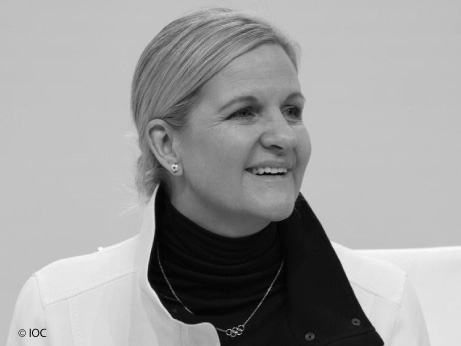
Kirsty Coventry
President, International Olympic Committee
August 2026
It has been a little over a year since you assumed the IOC Presidency. Over this period, you have engaged in a broad and inclusive consultation process, including dialogue with Olympic Cities and stakeholders at last year’s Olympic Legacy Forum. How important has it been for you to actively consult with these legacy stakeholders, and how have these exchanges shaped your perspective so far?
For me, the starting point has always been listening. The consultation process that led to Fit for the Future was deliberately broad and inclusive, because no single part of our community has all the answers. It was important to hear from athletes, National Olympic Committees, International Federations, Organising Committees, Olympic Cities and many other partners.
These exchanges helped shape Fit for the Future as a shared direction — grounded in real experience and focused on how we keep the Olympic Movement strong, relevant and impactful in the years ahead.
Legacy has provided a particularly valuable perspective in these discussions. It is no longer something that can be considered only after the Games; it needs to be embedded from the beginning of planning and decision-making. My exchanges with Olympic Cities and legacy stakeholders have reinforced that the strongest legacies are those that respond to local priorities while remaining aligned with the values of the Olympic Movement.
As the IOC said, June’s announcements were not the finish line but an important moment to set the direction of the organisation. What do you see as the next steps and the opportunities to give new impulse?
June was an important moment because it allowed us to set the direction. But it was never the finish line.
The next step of Fit for the Future is to turn this direction into practical action, together with the whole Olympic Movement. That means keeping athletes at the heart of our decisions, staying focused on our core mission, being honest about where we need to improve, and having the courage to let go of what no longer serves us.
This is how we give new impulse to our Movement and shape its future together. Fit for the Future will continue to evolve because it is not a document that sits on a shelf. It is a commitment to keep listening, learning and adapting as the world around us changes.
Many cities and regions are currently expressing their interest in hosting future editions of the Games. What are the main evolutions in the host selection procedure?
An important message came across when we consulted with the Olympic Movement about the host selection process to make it fit for the future. We talked to everyone with a key stake – recently-elected hosts, Interested Parties for future editions, National Olympic Committees, International sports Federations, and all the IOC Members.
They told us that, while they support the dialogue approach the IOC adopted in 2019 and its emphasis on adapting the Games to the local context to create long-term benefits for host communities, some vital reforms were needed.
Potential hosts wanted clearer timelines to enable them to obtain the required government support for their plans. IOC Members wanted to be better informed about projects as they progress.
In response, starting for the Olympic Games 2036, the IOC has set a defined timetable towards election and a more gradual progression through the dialogue stages, with greater involvement from IOC Members. In March 2027 the Executive Board will shortlist a number of Interested Parties with developed projects that align with the IOC’s strategic direction. These projects will be invited into Strategic Dialogue for deeper evaluation and increased collaboration.
Priority will continue to be placed on the athlete experience, as well as making use of existing or temporary venues, limiting new construction and ensuring that public investments serve communities well beyond the Games.
What is your vision of the place and role of Olympic Cities and Olympic legacy entities in building Olympic legacy and then keep it alive?
Olympic Cities and legacy entities play a unique role because they are the custodians of the Olympic Movement long after the Games have ended in their country.
While the Games themselves are a moment in time, host cities, regions and local organisations, together with local Organising Committees, turn that moment into lasting impact. They understand local needs, maintain relationships with communities and help ensure that investments in sport, infrastructure, education and culture create lasting benefits for future generations.
I would also like to see this work connect even more closely with the broader sports ecosystem, including International Federations, National Olympic Committees and other sporting organisations.
Together, they can help ensure that Olympic hosts remain active centres of sport by continuing to attract and stage international events, creating opportunities for athletes and inspiring greater participation across their regions.
Members are delighted to be welcomed at Olympic House for the 2026 Olympic Legacy Forum and the World Union of Olympic Cities warmly thanks you for this opportunity. What is the main message you would like to convey on the collaboration between the IOC and the Union?
It will be a pleasure to welcome the members of the World Union of Olympic Cities to Olympic House.
The World Union of Olympic Cities is an important partner in helping us ensure that Olympic legacy continues to create lasting value for host cities and communities. Its network allows cities to share practical experience, learn from one another and build on the successes of previous hosts.
The Olympic Legacy Forum is particularly valuable in this regard because it brings together those who are directly involved in keeping legacy alive on the ground. It provides an opportunity to discuss shared challenges – from climate resilience and urban development to social inclusion and public engagement – and to develop solutions together.
My message is therefore one of appreciation and ambition. Appreciation for the partnership we have built over the years and ambition to make it stronger and continue working together to strengthen the legacy of the Olympic Games. By bringing together the IOC’s global perspective and the expertise of Olympic Cities, we can help ensure that the Games continue to generate positive and lasting benefits for communities around the world.